
What To Do If You Lose Sight of a Snake
You saw a snake — then suddenly it disappeared. Maybe it slid under the deck, vanished into mulch, or moved behind a cupboard. Here's exactly what to do next.
First: Don't Assume the Snake Has Left
This is the biggest mistake people make. A snake disappearing from view does not automatically mean it has left the property.
Snakes can move surprisingly quickly through garden beds, under decking, rock walls, pool equipment areas, roof voids, garages, stored materials, drainage lines, wall cavities, and dense vegetation. Many species rely heavily on cover and will often freeze once hidden rather than continue moving openly.
"A snake that vanished 30 seconds ago may still be very close."
Once you lose sight of a snake, you no longer know where the risk is — and that changes how you should respond.
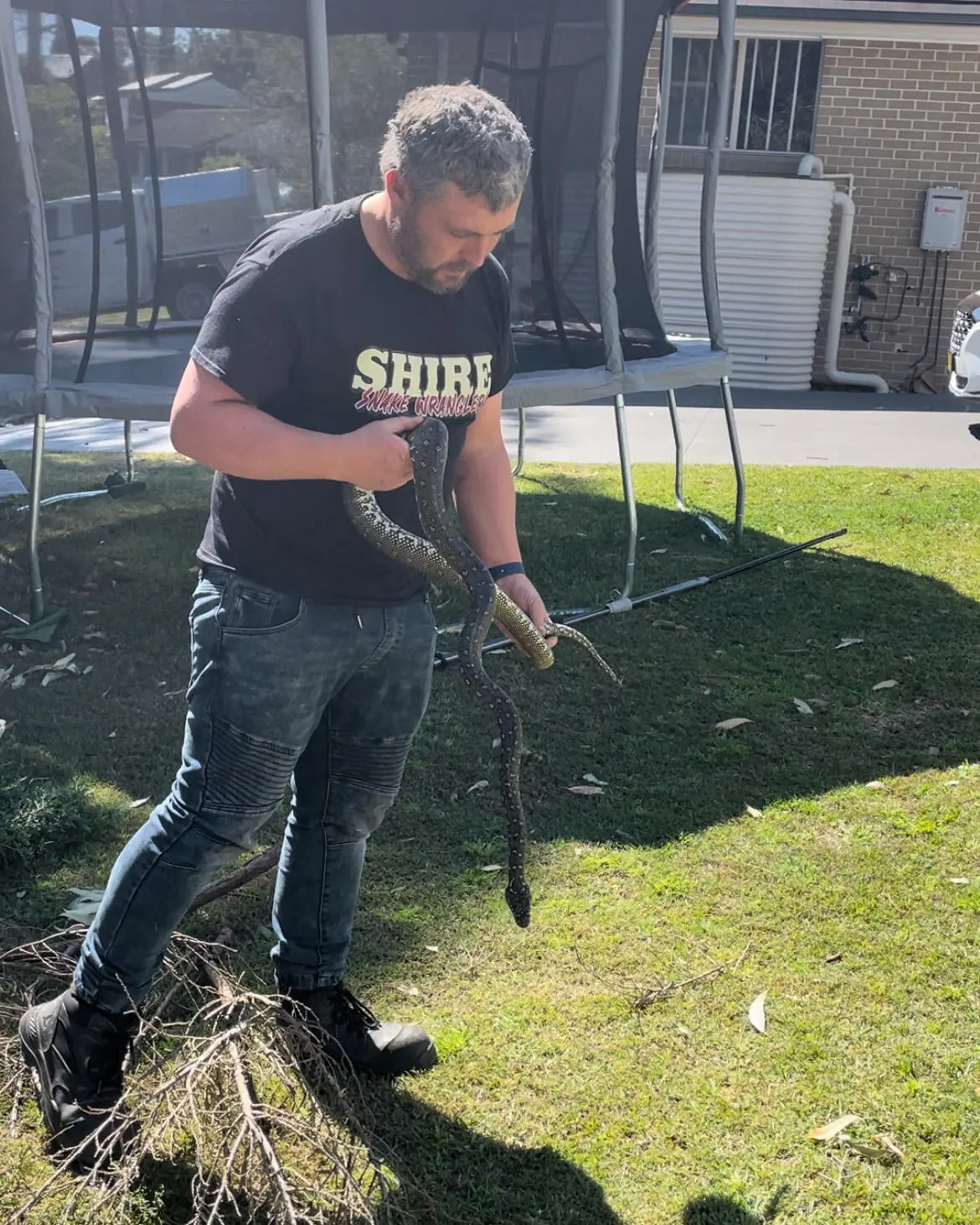
What To Do — Step by Step
Stop Searching Immediately
Your first instinct may be to go looking. Don't. Most snake bites occur when people attempt to approach, move, or capture snakes. NSW guidance consistently recommends backing away rather than interacting. Avoid lifting timber, pulling weeds, moving bins, turning over rocks, reaching into dark spaces, spraying hoses, or poking objects into gaps.
Mark the Last Known Location
One of the most valuable things you can do is remember exactly where the snake disappeared. Note which direction it was travelling, how long ago you saw it, whether it was moving quickly or slowly, and whether it went upward, downward, or under something. Place a chair or bucket several metres away, take a photo, or drop a pin on your phone. Professional catchers work backwards from the final confirmed sighting.
Create a Safe Buffer Zone
Once sight is lost, create distance. Inside the house: close internal doors, keep everyone in another room, place towels at door gaps, and keep pets secured. In the backyard: restrict access, bring pets inside, and avoid mowing or gardening. At commercial sites: isolate the area, notify staff, and prevent unnecessary foot traffic. The goal is reducing accidental encounters.
Think Like a Snake — Where Did It Go?
Professional catchers assess four things: shelter (timber piles, mulch, retaining walls), temperature (concrete edges, sunny walls, warm garages), food sources (rodent activity, frog habitat), and escape routes (fence lines, drainage, wall cavities). Understanding these factors narrows the likely hiding locations significantly.
If the Snake Went Inside
Indoor disappearances create the most anxiety. Close the room, block gaps under doors, and reduce all foot traffic — professional searches become significantly harder once multiple people have moved through the house. Do not lift furniture, pull appliances out suddenly, or reach behind items. If you can safely check — visually only, without reaching — look under lounges, behind fridges, in laundry corners, and behind bathroom cabinets. Then stop and call a professional.
If the Snake Disappeared in the Yard
Outdoor disappearances are extremely common and many snakes simply continue travelling. Common hiding places include pool pumps, garden edging, compost bays, under sheds, retaining walls, firewood stacks, and long grass. Do not start dismantling structures. Professional catchers search based on time since sighting, temperature, nearby habitat, species likelihood, and property design.
Step 7: Should You Wait or Call a Snake Catcher?
Call immediately if:
- The snake was inside your home
- Children regularly use the area
- Pets are present
- You cannot confidently isolate the area
- The snake was seen entering a structure
- Multiple sightings have occurred recently
You may monitor if:
- The snake was visibly moving away
- It entered open bushland
- Access can be controlled
- No children or pets are at risk
- The area can be safely isolated
What Professional Snake Catchers Do When the Snake Is Gone
Many people assume: "If nobody can see the snake anymore, there's nothing a catcher can do." That's not always true.
Behaviour Assessment
Estimating likely movement based on time, temperature, and species behaviour.
Habitat Assessment
Identifying attractive shelter spots the homeowner may have missed.
Thermal & Environmental Review
Looking at conditions that influence where the snake is likely to be.
Risk Reduction
Helping secure the area and advising on prevention to reduce future encounters.
No reputable professional can guarantee a hidden snake will always be found — but in many cases the snake is still present in a location the homeowner missed.
Common Mistakes After Losing Sight of a Snake
Mistake 1: Assuming it's gone
Many hidden snakes remain very close. A snake that vanished 30 seconds ago may still be within metres of where you last saw it.
Mistake 2: Trying to flush it out
Water and noise often create unpredictable movement and increase the chance of a defensive encounter in a confined space.
Mistake 3: Letting pets investigate
Dogs account for many dangerous interactions. A snake that would otherwise avoid humans may defend itself against a curious dog.
Mistake 4: Searching alone
People consistently underestimate how many concealment opportunities exist in a typical backyard or home.
Mistake 5: Attempting DIY capture
Wildlife authorities consistently advise against attempting to catch or kill snakes. The vast majority of snakebite incidents happen during human interaction attempts.
Preventing Future "Lost Snake" Situations
You cannot completely eliminate snakes from NSW properties — but you can reduce how attractive your property is to them.
Reduce shelter opportunities
- Keep lawns maintained
- Reduce dense ground cover
- Store materials off the ground
- Remove debris and wood piles
- Seal obvious gaps under structures
Reduce food sources
- Control rodents in and around the home
- Secure compost bays
- Manage bird feeders
- Keep chicken coops secured
- Remove frog habitat near the house
Frequently Asked Questions
QCan a snake stay inside a house?
Yes. If shelter and access exist, snakes may remain hidden temporarily inside walls, under appliances, in roof voids, or behind stored items.
QWill a snake come back after disappearing?
Usually not the same individual intentionally returning — but suitable habitat can attract future activity. Identifying and reducing shelter, food, and entry points is the best long-term strategy.
QHow long should I wait after losing sight of a snake?
There is no universal rule. Indoor sightings generally justify faster action. If children or pets are present, or you cannot isolate the area, calling a licensed snake catcher is the safest option.
QShould I try to flush the snake out?
No. Water and noise often create unpredictable movement and increase the chance of a defensive encounter.
QWhat can professional catchers do if the snake is gone?
Quite a lot. Catchers can assess behaviour and likely movement, identify attractive shelter, evaluate the environment, and provide risk reduction advice. Sometimes the snake is still there — in a location the homeowner missed.
QShould I try to identify the species?
Only if you can do so safely from a distance. Never move closer for identification purposes. Assume any unfamiliar snake in NSW could be venomous.
Final Thoughts
Losing sight of a snake can feel worse than seeing one — but disappearing behaviour is completely normal. Most snakes are not waiting to strike. They are looking for safety, shelter, and an escape route.
Your job is not to find the snake. Your job is to reduce risk. Stay calm, isolate the area, remember the last known location, and avoid disturbing potential hiding spots.
If you're unsure whether the snake is still present — treat the area as occupied until proven otherwise.
Related Articles
Snake disappeared on your property?
A licensed Snake Catchers NSW catcher can assess the area, search for the snake, and provide a professional risk assessment — even when the snake isn't immediately visible.
0428 458 856Book Online — 10% OffAvailable 24/7 · Licensed NPWS Catchers · NSW-wide