
Finding a snake inside your house can be frightening, especially in NSW homes close to bushland, creeks, wetlands, parks and other suitable habitat. The most important thing to remember is do not panic, do not approach the snake and do not try to catch or kill it yourself.
Most snakes would rather escape than confront a person. They can defend themselves if threatened, and many bites happen when people attempt to catch, handle or kill them. Create distance, keep people and pets away and contact a licensed snake catcher.
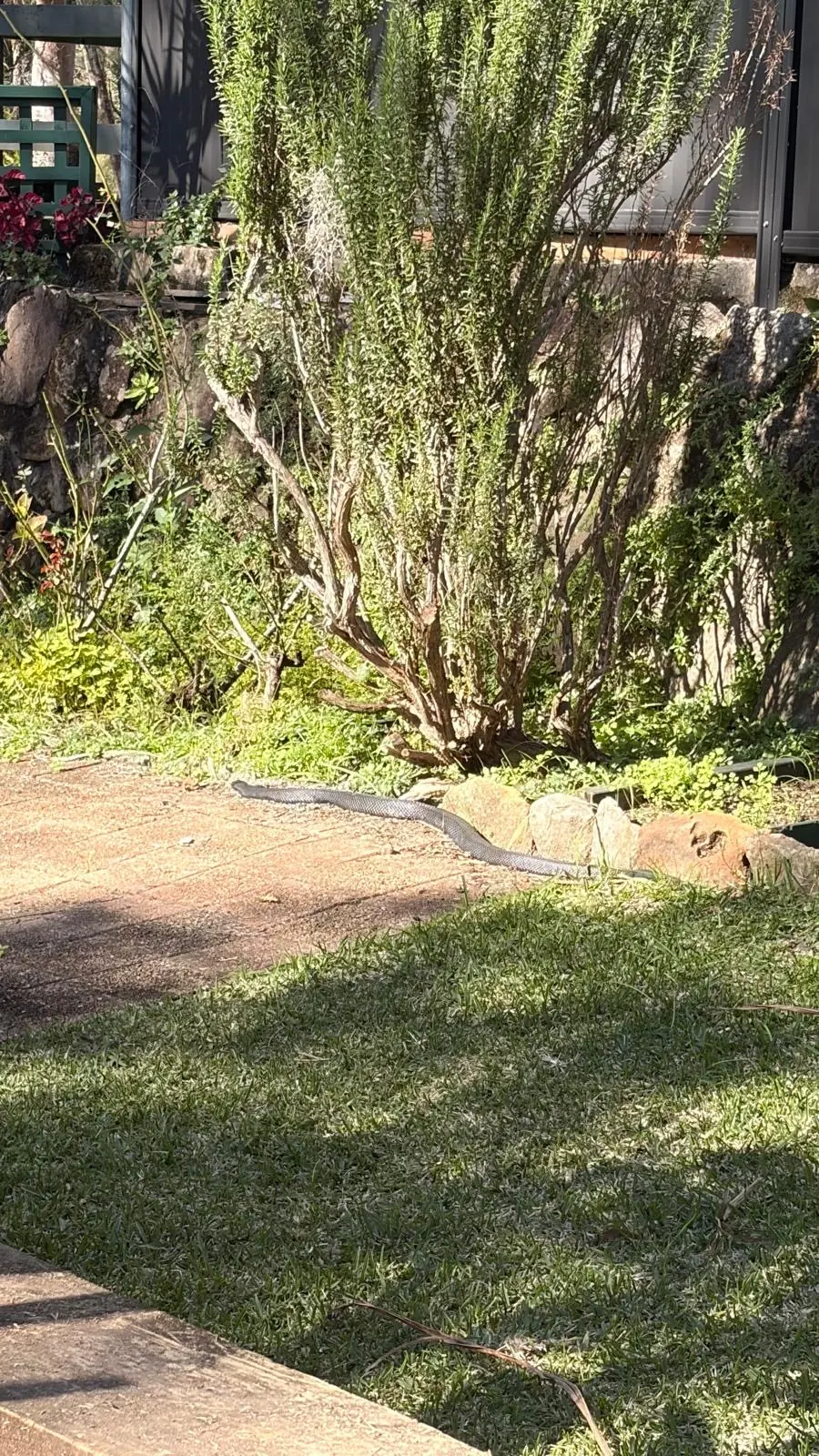
What should you do right now?
- Stay calm and move away from the snake.
- Keep children and pets away from the area.
- Do not touch, catch, chase or kill the snake.
- If safe, close internal doors to isolate the area.
- Keep visual track of it from a safe distance.
- Contact a licensed snake catcher for professional removal.
Move away and keep everyone safe
If you are in the same room, slowly move away without sudden movements. If you can safely leave, close the door behind you. Do not walk past a snake in a hallway or confined area, corner it or block its path. Never place yourself between the snake and an exit.
Children and pets
Keep children away and prevent dogs and cats from approaching. Dogs may bark at or chase snakes, while cats may investigate at close range.
Do not try to kill it
Using a broom, shovel or other tool can turn a calm situation into a dangerous one. Native reptiles are also protected in NSW under the Biodiversity Conservation Act 2016.
What if the snake disappears?
Do not assume it has left. If you watched it clearly leave through an open door, that is different from seeing it disappear behind furniture. Move everyone away and tell the catcher exactly where it was last seen and which direction it travelled.
Should you keep watching the snake?
If you can do so from a safe location, keeping visual track of the snake can help a catcher locate it. Do not follow it around the house or move closer for a photograph. A photo may help with identification only when taken from a substantial distance.
Do not search for it yourself
Do not move furniture, pull apart walls, move appliances or climb into a roof cavity to find a concealed snake. Restricted visibility, wiring, insulation and the possibility of disturbing the animal create additional risks.
Why do snakes come inside houses?
Snakes do not generally enter houses because they want to attack people. They may be following food, seeking shelter or temperature relief, or entering accidentally through an opening.
Food
Rats, mice, frogs and lizards can attract snakes. Eastern Browns commonly feed on rats and mice around human-modified environments.
Shelter
Garages, sheds, roof spaces, building materials and stored boxes can provide protection from weather, predators and temperature extremes.
Temperature
As ectothermic animals, snakes may move through buildings looking for a warmer, cooler or more sheltered microclimate.
Accidental entry
Open doors, garages, damaged screens, vents, gaps around buildings, plumbing openings and other access points can allow entry.
What if it is in the roof, kitchen or bathroom?
Do not climb into a roof cavity, put your hands into an opening or move a dishwasher, washing machine, refrigerator, vanity or other appliance. Roof cavities contain insulation, wiring and unstable surfaces. In bathrooms, do not assume a snake came through the toilet: possible access points include drains, doors, vents, wall cavities and gaps around plumbing. A professional can assess the surrounding access points safely.
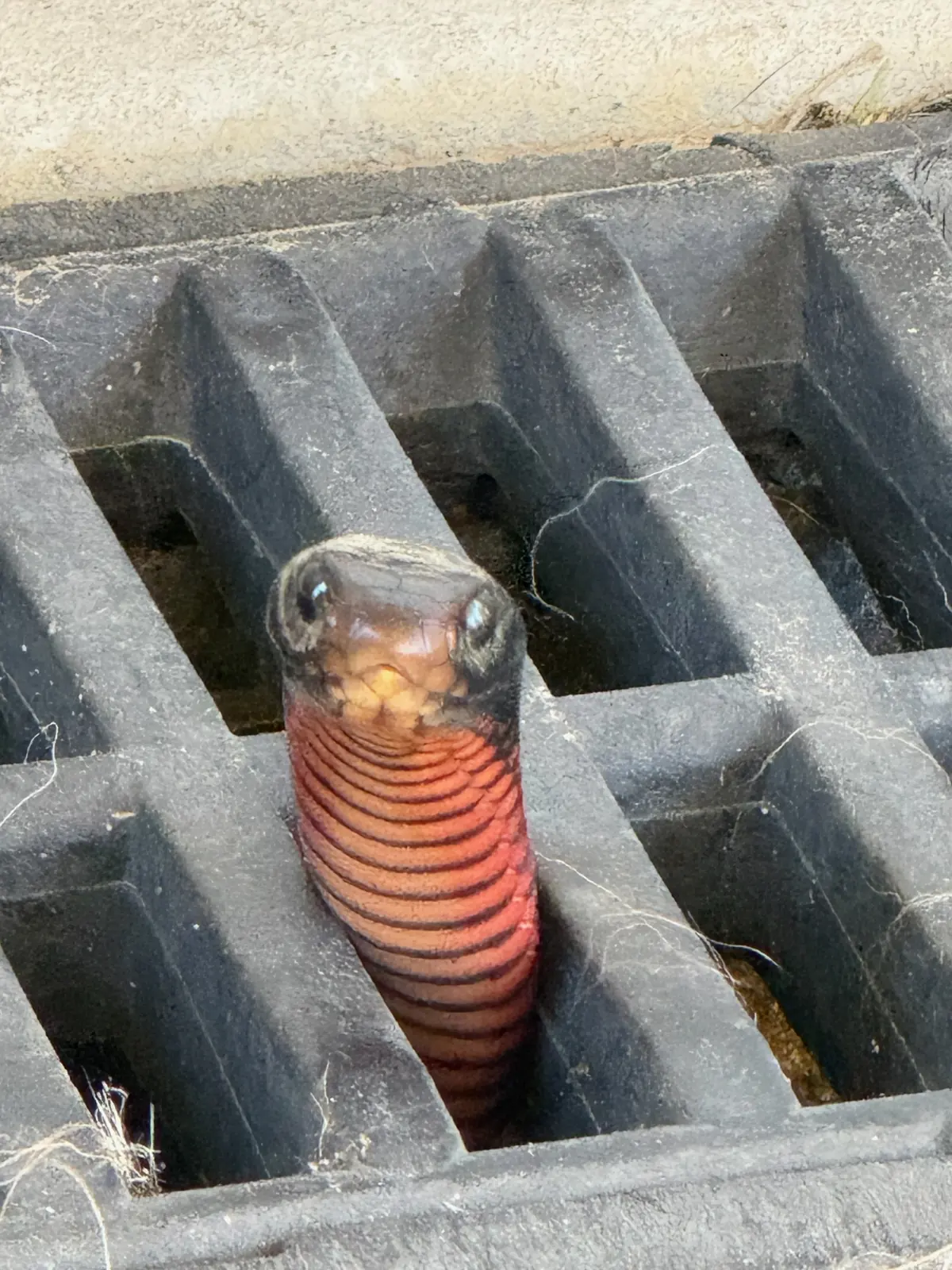
What snakes might be found inside NSW homes?
Eastern Brown Snake
A medically significant venomous snake that feeds on rats and mice and can occur around human-modified environments.
Red-bellied Black Snake
Often associated with creeks, wetlands and other damp habitat, but any unidentified snake should be treated cautiously.
Diamond Python
A non-venomous climbing python documented in Sydney bushland, roofs and rafters.
Tiger Snake and other local species
Species vary by location. Never rely on appearance alone to decide whether a snake is dangerous.
Snakes can be difficult to identify when moving quickly, partly hidden or seen in poor lighting. Do not move closer to identify one.
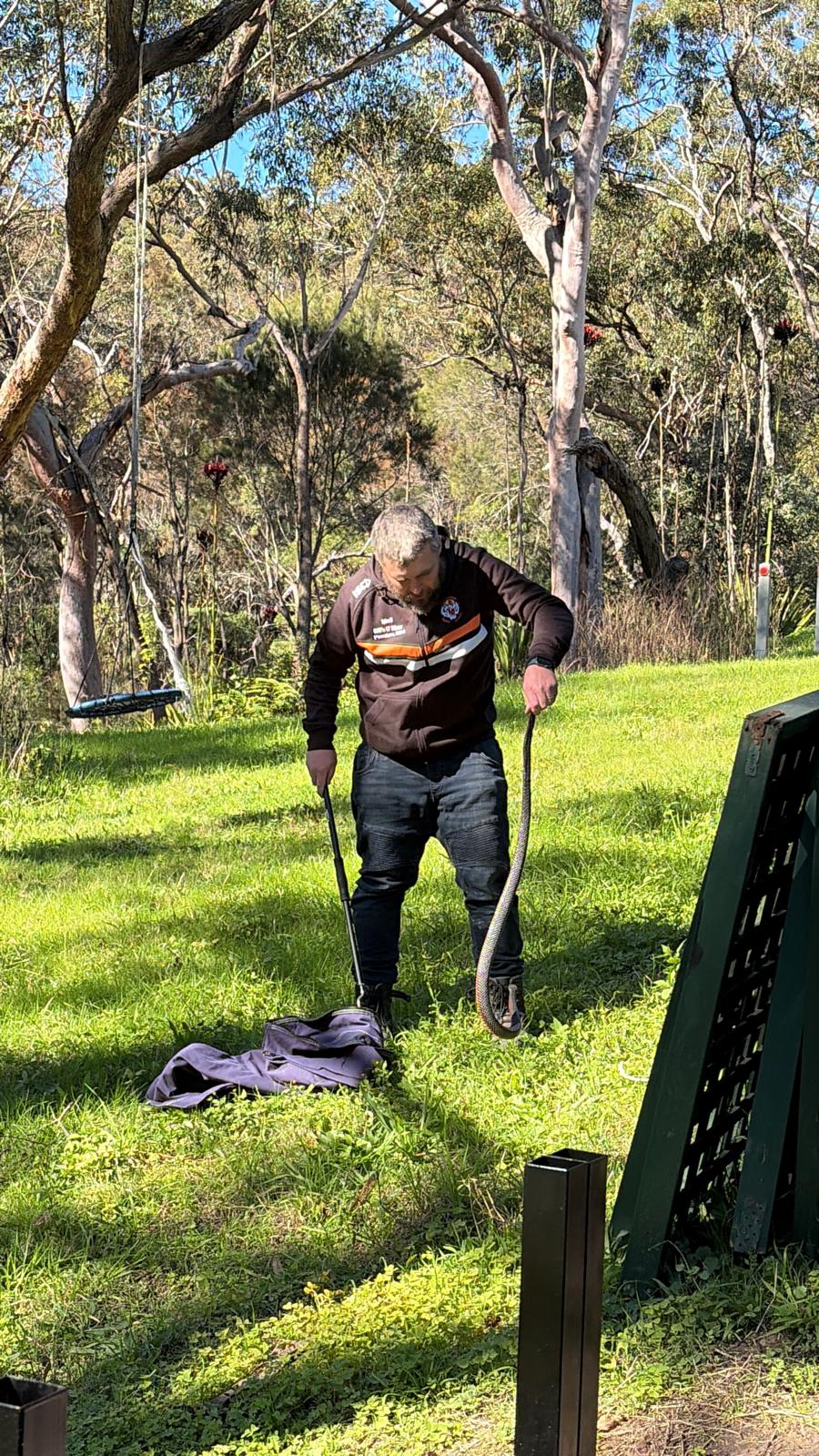
How to reduce the chance of another snake entering
When should you call a snake catcher?
Contact a licensed reptile handler whenever a snake is inside your home. This is especially important when:
- It is in a bedroom or confined space
- Children or pets are present
- The snake is venomous or unidentified
- It has disappeared inside the house
- It is inside a roof cavity
- You cannot safely leave the room
- You are unsure what to do
If someone has been bitten
Call Triple Zero (000) immediately and ask for an ambulance. Keep the person still and calm, apply a pressure immobilisation bandage and immobilise the affected limb. Do not wash the bite, cut it, suck venom out, apply a tourniquet or delay medical treatment to identify the snake.
Frequently Asked Questions
What should I do if I find a snake inside my house?
Move away, keep children and pets away, avoid disturbing the snake and contact a licensed snake catcher. If safe, keep track of where it is from a distance.
Should I try to catch or kill a snake inside my house?
No. NSW authorities advise against attempting to catch or kill snakes. Many bites happen when people try to handle or kill them.
Can a snake hide inside a house?
Yes. Snakes can disappear behind furniture, under appliances, inside wall cavities, roof spaces and other concealed areas. Do not search for one yourself.
What should I do if someone is bitten?
Call Triple Zero (000) immediately, keep the person still and apply a pressure immobilisation bandage. Do not wash the bite, cut it, suck venom out or use a tourniquet.
Are snakes protected in NSW?
Native reptiles are protected under NSW biodiversity legislation. Licensed reptile handlers catch and release reptiles under the relevant licence conditions.
Need a Snake Removed From Your House?
Licensed handlers · Safe humane removal · Available across NSW
0428 458 856Book Online — 10% OffAvailable 24/7 across NSW