
If you have found a snake in your home, backyard, garden, shed, garage, roof cavity or around your property, Snake Catchers NSW can help connect you with a professional snake catcher servicing the Blue Mountains City Council area.
The LGA covers approximately 1,431 square kilometresCall-out fees apply. Living beside this much bushland means snakes are a normal and important part of the local ecosystem.
Keep your distance, keep children and pets away, and call 0428 458 856.
Areas We Service – Blue Mountains City Council
Our service area covers the Lower, Mid and Upper Mountains, including:
We also assist surrounding Blue Mountains communities, rural properties and homes adjoining bushland. Because the area stretches more than 100 kilometres, availability depends on your location and the time of your call.
Why Are There So Many Snakes in the Blue Mountains?
Sandstone formations, forests, wetlands, creeks, swamps, gullies and relatively undisturbed habitat provide food and shelter for native reptiles. Many homes sit directly at the bushland-residential interface, sometimes separated from natural habitat by little more than a fence.
🌿 Bushland and national parks
The World Heritage landscape provides extensive habitat and movement corridors.
💧 Creeks and wetlands
Water attracts frogs and other prey associated with Red-bellied Black Snakes and Tiger Snakes.
🏡 Bushland-edge homes
Gardens, decks, retaining walls, sheds and roof cavities can offer temporary shelter.
🌡 Seasonal activity
Warmth, weather, prey and elevation influence activity; Copperheads and Red-bellied Black Snakes can become active early in spring.
Snakes Found in the Blue Mountains
The local fauna inventory records 61 reptile species, including venomous snakes and the large non-venomous Diamond Python.
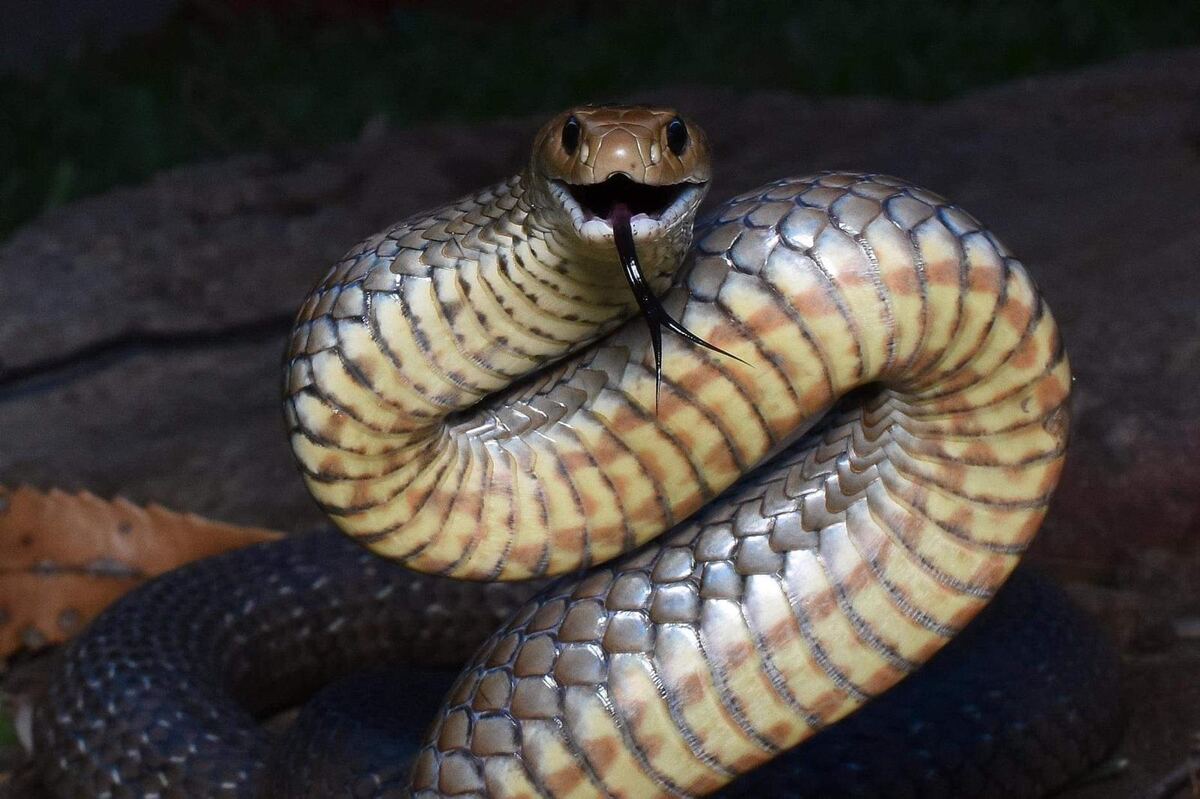
Eastern Brown Snake (Highly Venomous)
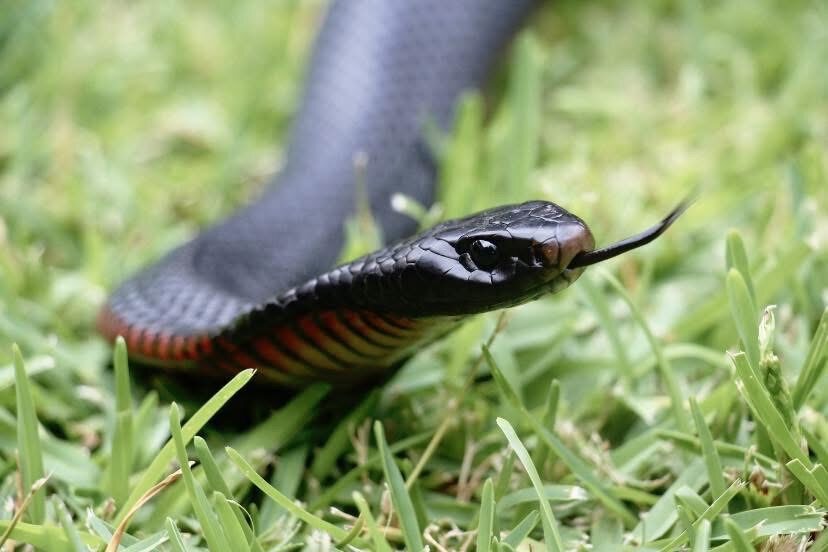
Red-bellied Black Snake (Venomous)
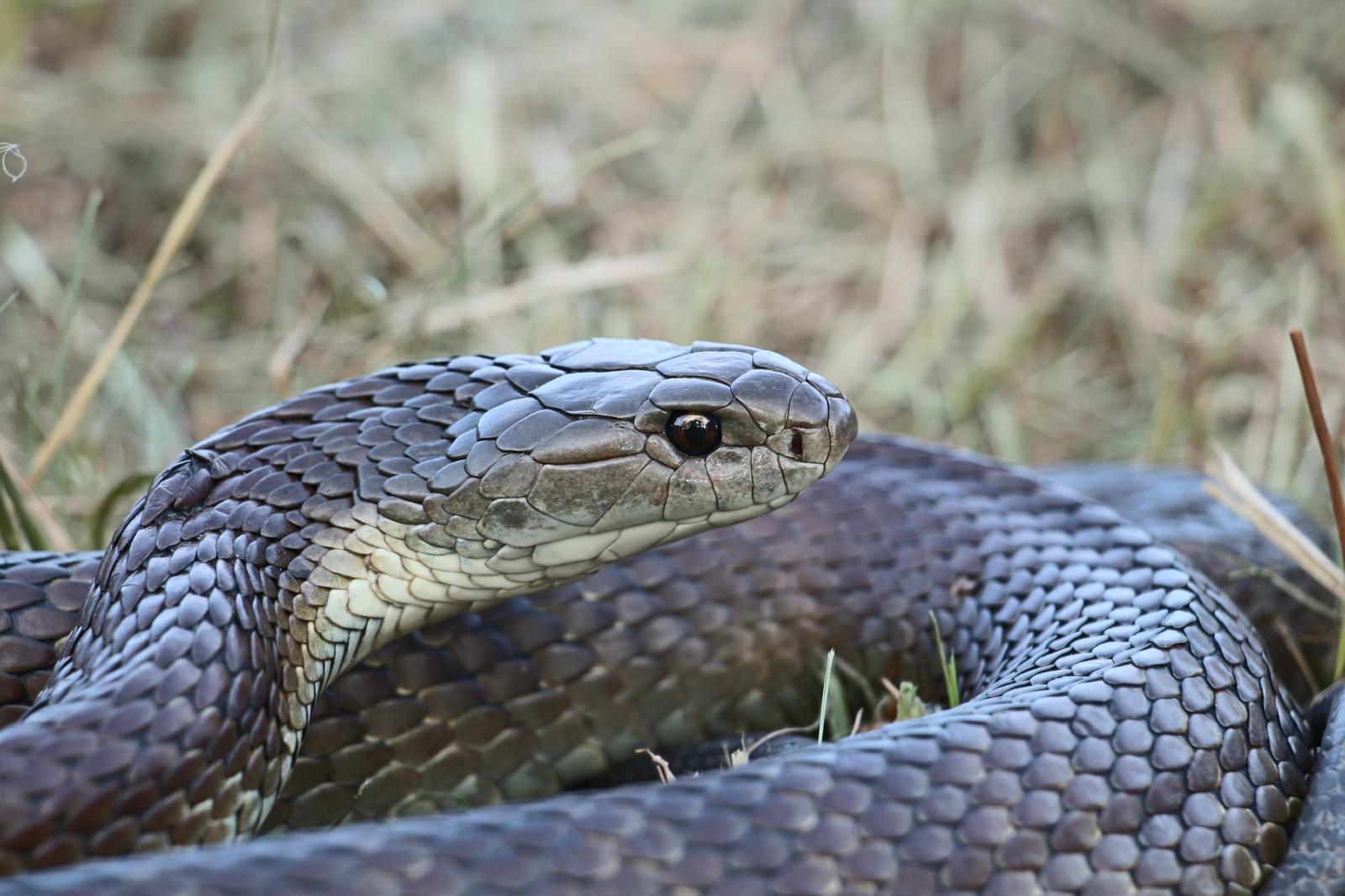
Tiger Snake (Venomous)
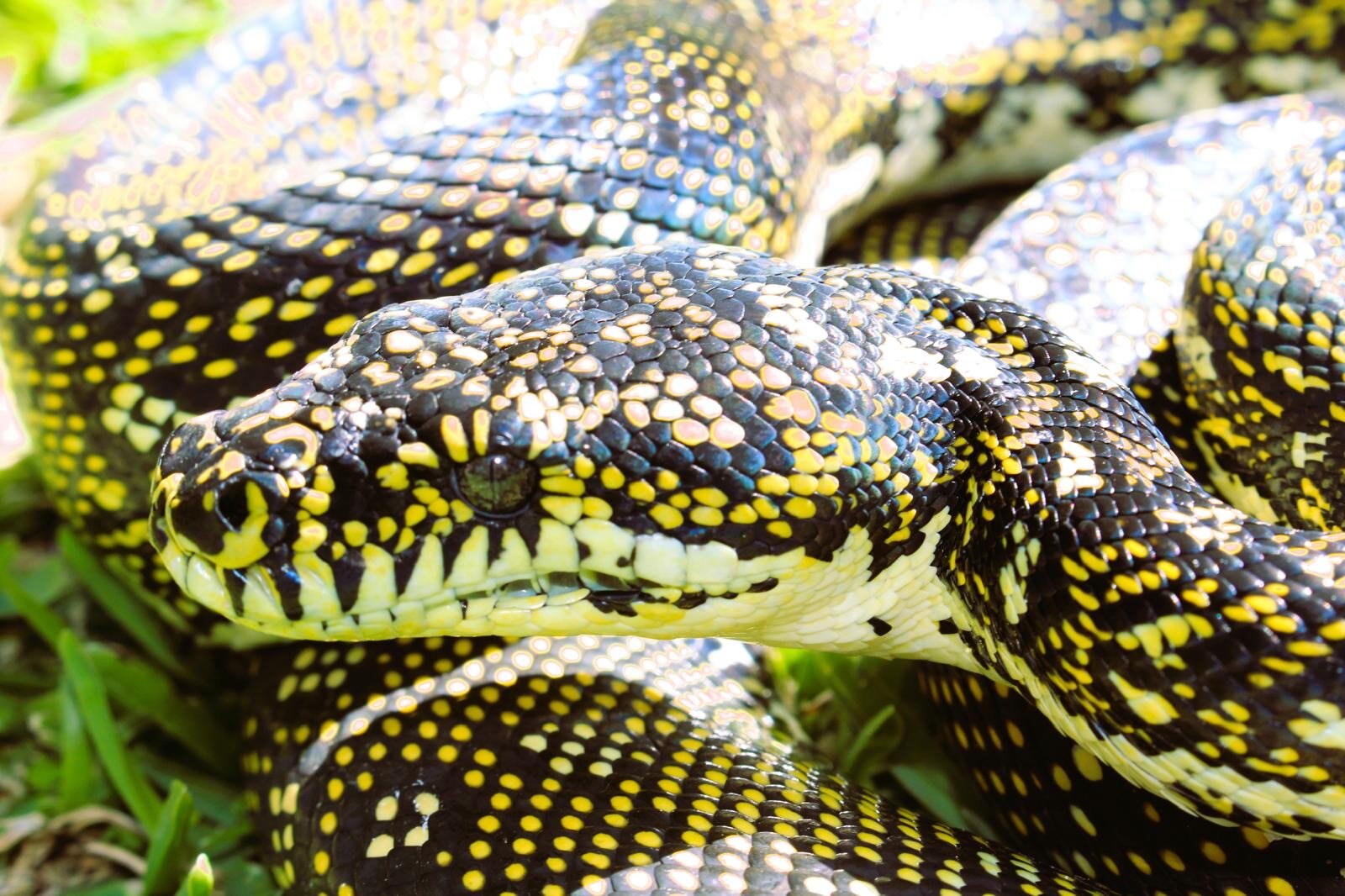
Diamond Python (Non-venomous)
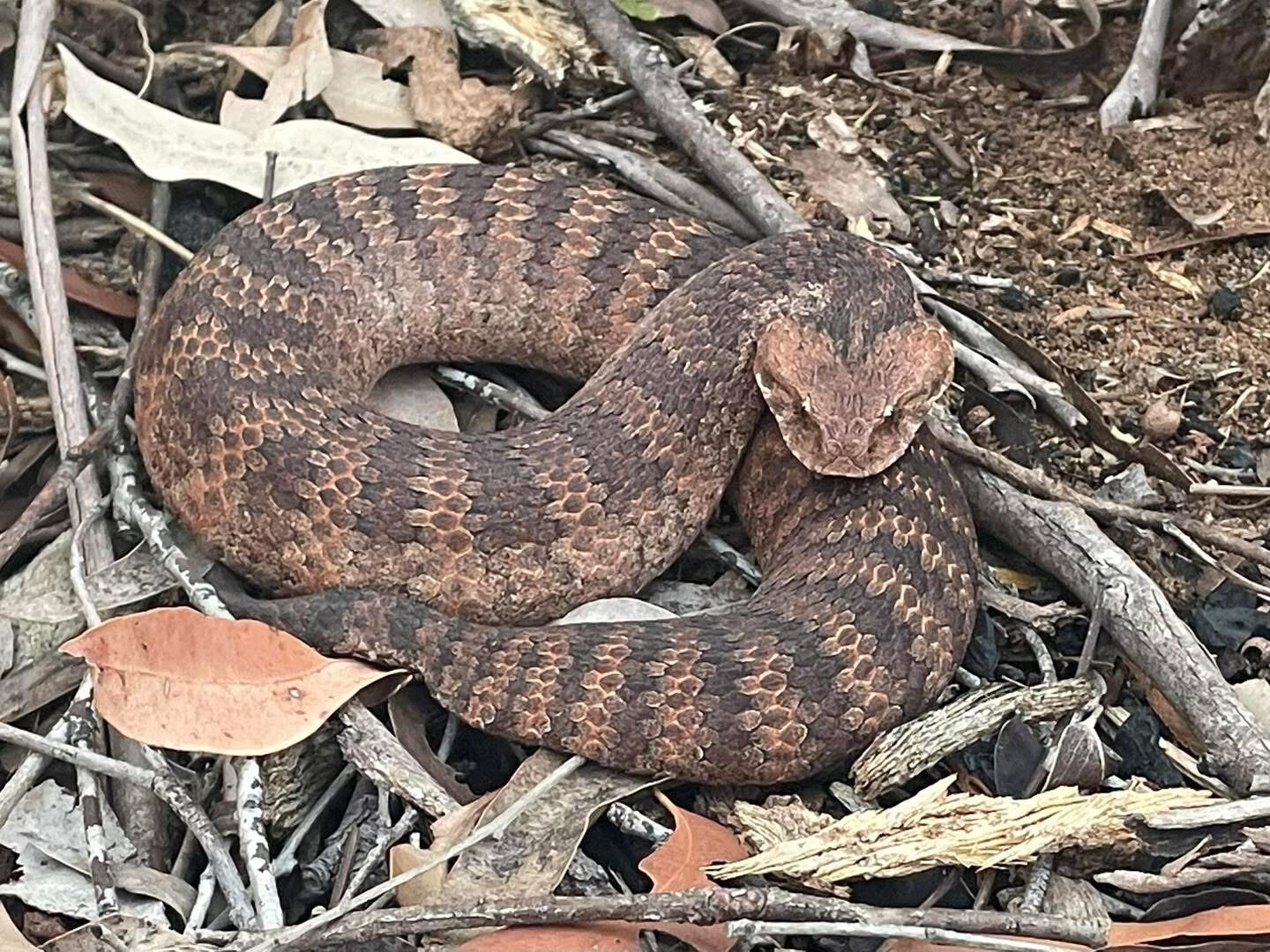
Common Death Adder (Venomous)
Tiger Snakes
205 local records; associated with wetter environments, creeks and dense vegetation.
Highland Copperheads
211 records; especially relevant to Upper Mountains and higher-elevation habitat.
Red-bellied Black Snakes
869 records; often found near creeks, dams, swamps and frogs.
Eastern Brown Snakes
248 records; may occur around gardens, sheds, rural properties and bushland.
Diamond Pythons
312 records; non-venomous climbers that may enter roofs, decks and sheds.
Common Death Adders
59 records; highly camouflaged around rocks, timber and dense vegetation.
Broad-headed Snake
Threatened and associated with sandstone habitat. Never disturb rocks or attempt to investigate potential reptile shelter.
What To Do If You See a Snake
- Move away slowly and do not approach for a better look.
- Keep children inside or in another safe area.
- Secure dogs and cats only if it can be done safely.
- Do not corner, catch, kill or move the snake.
- Take a photo only from a considerable distance.
- Tell the catcher your suburb, location, direction of travel and whether it entered a building.
- If bitten, keep the person still, call 000 and apply pressure immobilisation.
If the snake disappears
Keep people and pets away. It may have moved under a deck, into vegetation, behind a retaining wall or into a shed. Tell the catcher where you last saw it.
Reducing Snake Encounters Around Your Property
Keep lawns maintained
Shorter grass makes movement easier to see around frequently used areas.
Reduce clutter
Remove unnecessary timber, metal, rubbish and unused building materials.
Manage rodents
Store animal food securely and address rodent activity appropriately.
Check buildings
Secure sheds and garages and inspect gaps under doors and around roof structures.
Maintain clear paths
You do not need to remove native vegetation; focus on access paths and areas around buildings.
Expect bushland encounters
Properties backing onto natural habitat will always have some wildlife activity.
Blue Mountains Snake Catcher FAQs
Are there snakes in the Blue Mountains?
Yes. Extensive bushland, wetlands, creeks and residential areas bordering natural habitat support Tiger Snakes, Highland Copperheads, Red-bellied Black Snakes, Eastern Brown Snakes, Diamond Pythons and other native species.
Are Highland Copperheads found in the Blue Mountains?
Yes. Highland Copperheads are particularly relevant to higher-elevation areas including Hazelbrook, Lawson, Wentworth Falls, Leura, Katoomba, Medlow Bath, Blackheath and Mount Victoria. Never approach one for identification.
Can snakes enter Blue Mountains houses?
Yes. Snakes may enter homes, roof cavities, garages and sheds while looking for food, shelter, water or suitable temperatures. Isolate the area only if safe and contact a professional catcher.
What should I do if a snake disappears?
Keep children and pets away from the last known location. It may have moved under a deck, behind a retaining wall, into vegetation or under a shed. Tell the catcher exactly where it was last seen.
Do you service rural and bushland properties?
Yes. Professional snake removal is available across Lower, Mid and Upper Mountains homes, acreage properties, farms, holiday accommodation, businesses and bushland edges.
Are Diamond Pythons dangerous?
Diamond Pythons are non-venomous, but they are large wild animals that can bite if handled. Do not attempt to pick one up; contact a professional snake catcher.
Can I kill a snake on my property?
No. Native snakes are protected wildlife in NSW. Keep away and contact a licensed catcher rather than attempting to kill, capture or move the snake yourself.
What should I do after a suspected snake bite?
Treat it as a medical emergency. Keep the person still, apply pressure immobilisation, call 000 and do not wash or cut the bite, attempt to catch the snake or walk around looking for it.
Blue Mountains City Council Service Area
Find a Licensed Snake Catcher Near You
Search by suburb or postcode to find an NPWS licensed catcher in your area.
Need a Snake Catcher in Blue Mountains City Council?
Fast response · Licensed & insured · Humane relocation · Homes, farms and bushland properties covered
0428 458 856Available 24/7 · Blue Mountains City Council