
Eastern Blue-tongued Lizard
Tiliqua scincoides scincoides
Australia's most recognisable backyard lizard — completely harmless, slow-moving, and fully protected under NSW law.
0428 458 856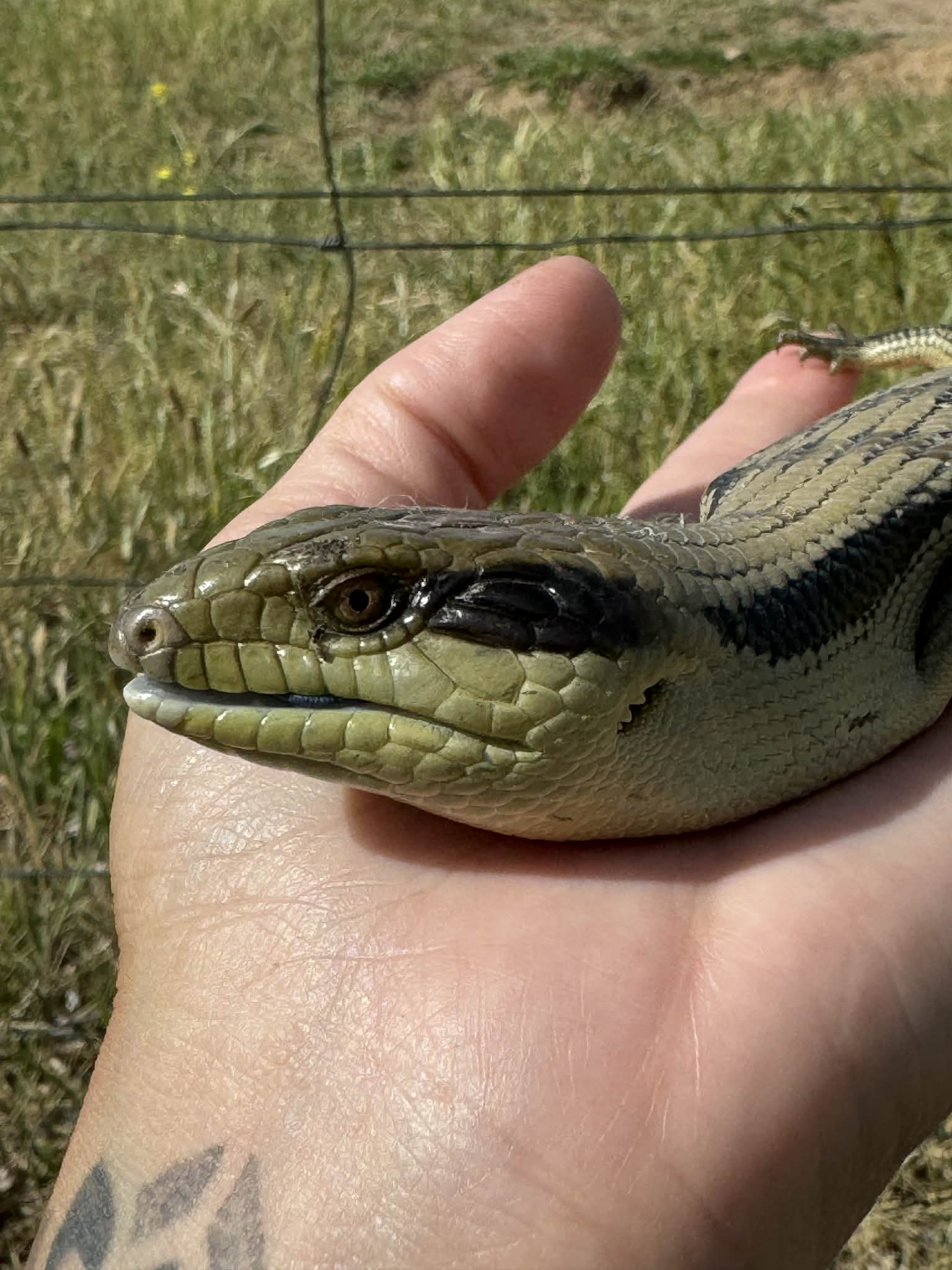
Scientific Name
Tiliqua scincoides
Average Length
45 – 60 cm
Danger to Humans
Harmless
Activity
Diurnal (daytime)
Identification
- Colour: Brown to grey body with darker bands across the back and tail. The underside is paler — cream or yellowish.
- Size: Adults reach 45–60 cm in total length. Heavy-bodied and stocky with short limbs.
- Tongue: The brilliant blue tongue is the unmistakeable feature — displayed as a warning signal when threatened.
- Scales: Large, smooth, overlapping scales give it a distinctive look. The body is elongated and somewhat sausage-shaped.
- Young: Live-born (not egg-laying). Juveniles look identical to adults but are smaller — sometimes just 10–14 cm at birth.
The blue tongue display is a bluff — they cannot seriously harm a human. They hiss, flatten their body, and display the tongue to scare off threats.
Habitat & Distribution in NSW
The Eastern Blue-tongued Lizard is one of Australia's most widespread reptiles, found across nearly all of NSW:
- Suburban gardens, backyards, and parks throughout Sydney and coastal NSW
- Dry and wet sclerophyll woodland and forest
- Grassland and farmland edges
- Found as far west as the inland plains and into Queensland
- Common under garden debris, timber piles, logs, and in rock gardens
Behaviour & Diet
Behaviour
- Slow-moving and docile — rarely attempts to flee quickly
- Diurnal — basks in the sun to regulate body temperature
- Hisses and displays blue tongue when threatened
- Lives alone — territorial with other blue-tongues
- Hibernates during cold winter months in cooler regions
- Lives up to 20+ years in the wild
Diet
- Snails and slugs (excellent natural pest control)
- Insects and beetles
- Berries and soft fruit
- Flowers and plant matter
- Carrion (dead animals)
- Cat food (in urban gardens)
Is it Dangerous?
Eastern Blue-tongued Lizards are completely harmless to humans. They have no venom and their bite — while possible if severely stressed — cannot break skin easily and poses no medical risk. They are beneficial garden residents that eat snails, slugs, and insects.
- Cannot seriously harm an adult human
- Bite is weak — may cause minor bruising at most
- Fully protected under NSW law — do not kill or harm them
- Dogs and cats can injure or kill blue-tongues — keep pets supervised outdoors