
Common Garden Skink
Lampropholis guichenoti
Australia's most abundant garden lizard — tiny, lightning-fast, and found in virtually every backyard across NSW. Completely harmless and brilliantly beneficial.
0428 458 856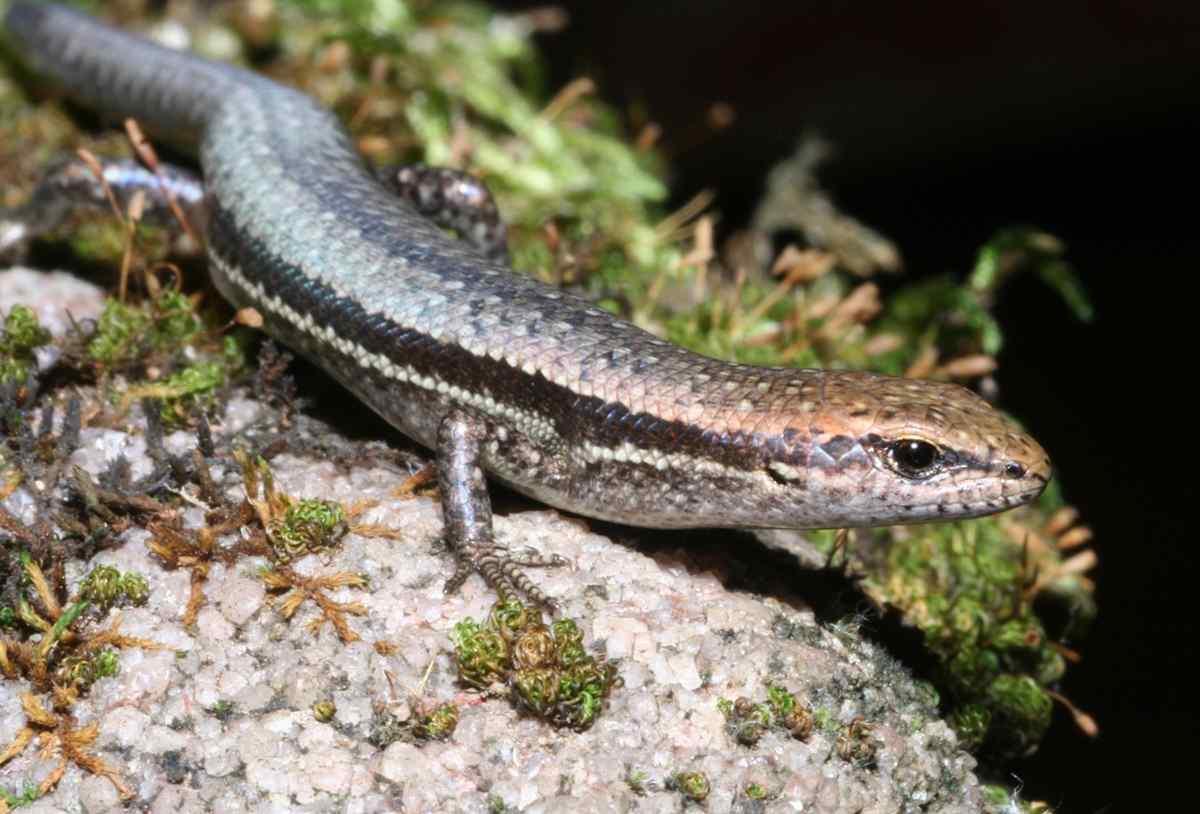
Scientific Name
Lampropholis guichenoti
Average Length
8 – 14 cm
Danger to Humans
Harmless
Activity
Diurnal (daytime)
Identification
- Colour: Brown to bronze on the back with a cream or yellowish underside. A dark brown stripe runs along each side of the body from nose to tail.
- Size: One of NSW's smallest lizards — adults reach just 8–14 cm in total length, with the tail about double the body length.
- Limbs: Four small, well-developed legs. Despite its small size it moves surprisingly fast.
- Tail: Very long relative to body length. Like most skinks, the tail can be dropped (autotomy) as a defence mechanism and will regrow.
- Similar species: Often confused with the Eastern Water Skink (larger) or the Delicate Skink. All are harmless and protected.
The small dark stripe running from the nose to the tail base is a key identification feature. These little lizards are extraordinarily fast — blink and they're gone.
Habitat & Distribution in NSW
The Common Garden Skink is one of the most widely distributed lizards in south-eastern Australia:
- Virtually every suburban garden, park, and bushland area in NSW
- Found under rocks, logs, leaf litter, garden debris, and roof tiles
- Common in compost heaps, timber stacks, and along fence lines
- Ranges from the coast to the tablelands — as high as alpine NSW
- Found across all of NSW south of the Queensland border
Behaviour & Diet
Behaviour
- Extremely fast — darts for cover at the first sign of danger
- Basks in sunny spots near shelter (rocks, logs, pavers)
- Egg-laying — females lay 2–6 small eggs under rocks or debris
- Often seen in groups — tolerant of others of the same species
- Active year-round in warmer coastal areas
Diet
- Small insects (flies, ants, beetles)
- Spiders and mites
- Small caterpillars and larvae
- Termites
- Tiny worms
Is it Dangerous?
The Common Garden Skink is absolutely harmless. It is tiny, has no venom, and cannot harm humans in any way. It is a hugely beneficial presence in any garden, consuming large quantities of insects.
- Cannot bite through human skin — too small
- No venom of any kind
- Fully protected under NSW law
- Encourage them in your garden — they eat pest insects naturally