
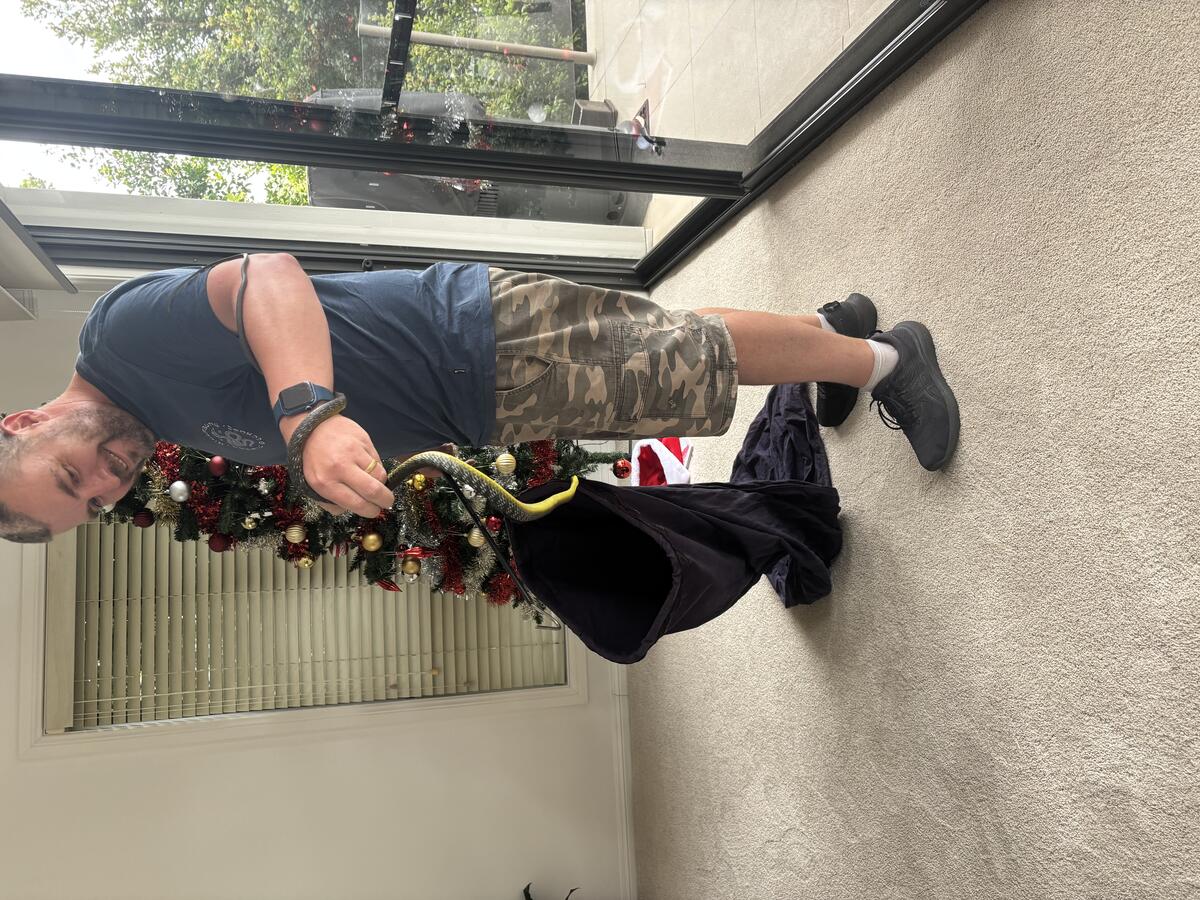
If you have spotted a snake in your Heckenberg backyard, beside your fence or inside your home, Snake Catchers NSW can help you decide what to do next. We provide professional snake removal and relocation assistance across Heckenberg and nearby Liverpool suburbs, with a focus on safe responses and responsible wildlife handling.
Heckenberg is an established residential suburb within the Liverpool local government area. Its streets, private gardens, local open spaces and connections to surrounding suburbs create an urban environment where native wildlife can still pass through residential properties.
A snake sighting does not necessarily mean there is a nest or a continuing problem. Snakes may travel through a yard while searching for food or shelter. The important thing is to keep your distance and avoid trying to handle the animal.
Why snakes can appear in Heckenberg
Residential development does not eliminate wildlife. Gardens, parks, drainage corridors and areas of remaining vegetation can provide shelter or connect habitats across the wider Liverpool district.
Formica Park is one of the recognised local recreational spaces in Heckenberg. Like other green spaces, parks can support outdoor recreation and contribute to the suburb's open-space network. Their existence should not be taken as evidence of a specific snake population or recent sighting.
Within the broader Liverpool area, waterways and remaining natural environments provide habitat for a range of native animals. Snakes can move between suitable areas and sometimes enter residential yards, particularly where there is groundcover, prey or an undisturbed place to hide.
Warm weather can increase movement as snakes search for food and mates. During cooler conditions, they generally become less active, although the amount of activity varies with local temperatures.
Which snake species may occur in the area?
Liverpool City Council identifies eastern brown snakes and red-bellied black snakes as common snakes in the broader Liverpool area. Other species recorded across the district include common tree snakes, yellow-faced whip snakes, red-naped snakes and blind snakes.
Eastern brown snakes may be encountered in sunny, open spaces and around grassy boundaries. Red-bellied black snakes are more closely associated with suitable wet habitats. Other native species have different habitat requirements and may be less frequently encountered in built-up areas.
These are regional species records rather than confirmed records for an individual Heckenberg street. Do not rely on colour or markings to decide whether a snake is safe.
Where snakes may be found around Heckenberg homes
Pay particular attention to places that offer shade, cover or access to prey, including:
- Overgrown lawn edges and dense garden beds.
- Spaces beneath garden sheds, steps and decks.
- Retaining walls, rock features and gaps around fences.
- Garage storage, outdoor cupboards and unused materials.
- Woodpiles and corrugated sheets left on the ground.
- Areas where mice or rats are attracted to food scraps or pet food.
Keeping grass short and reducing clutter can make a property less attractive as a hiding place. Seal obvious gaps in buildings where practical, maintain door seals and keep rubbish and compost secure.
Never reach under a shed, pot or pile of materials without being able to see what is there.
What to do if a snake is in your yard or house
Stop and move away slowly. Keep children and pets clear of the area, and tell other people in the household where the snake was seen.
Do not chase it, throw objects at it or attempt to catch it. If it is outdoors and moving away, give it room to leave. If it is inside, close the room off if this can be done safely and contact a licensed snake catcher.
If the snake disappears, do not begin moving furniture or searching through stored items. Record its last known location and provide that information to the catcher.
If anyone is bitten, call Triple Zero (000) immediately and follow the emergency operator's instructions. Apply pressure immobilisation first aid when appropriate, and keep the person still.
Snake removal and relocation in Heckenberg
Snake Catchers NSW provides professional assistance when a snake's location creates a safety concern. Our approach is to assess the situation, remove the snake where appropriate and arrange relocation in line with applicable NSW rules.
A snake passing through a garden may not require intervention. However, a snake inside a living area, near a doorway or close to a place used by children may need prompt professional attention.
We assist residents in Heckenberg and nearby suburbs, including Miller, Sadleir, Busby, Cartwright, Lurnea and other parts of the Liverpool district, subject to availability. Contact Snake Catchers NSW at snakecatchersnsw.com.au or call 0428 458 856. Available 24/7 — we catch them, you stay safe!
Nearby suburbs we service
Nearby service areas include:
Heckenberg snake catcher FAQs
Do you offer snake removal in Heckenberg NSW?
Yes. Contact Snake Catchers NSW for advice and assistance with snakes found at residential properties.
Are eastern brown snakes found in Heckenberg?
Eastern brown snakes are recorded in the broader Liverpool area. This does not establish that one is present at a particular property.
What should I do if a snake goes under my house?
Keep clear of access points and do not try to flush it out. Contact a licensed snake catcher and explain where it disappeared.
Can I kill a snake on my property?
No. Native snakes are protected in NSW. Keep your distance and seek assistance from an appropriately licensed reptile handler.
Need a snake catcher in Heckenberg?
If you need a snake catcher near you in Heckenberg, contact Snake Catchers NSW for practical advice and professional snake removal assistance.
Call 0428 458 856 — available 24/7View our wider Liverpool service area and Liverpool City Council coverage.